
Las Cruces Resident Lookup Records
One name does not identify one person. Use a record that answers a narrow question and keep its scope attached to the result. Doña Ana County property tools can connect a situs address, parcel, assessment account, and deed-holder label. The New Mexico Courts index identifies public case information, not filings. A professional-license result can show a credential status, while a vital certificate follows its own eligibility rules. Those distinctions make a resident lookup more accurate without turning several sources into a personal profile.
| Record | What It Confirms | Where | Access |
|---|---|---|---|
| Property account | Parcel, situs, assessment context, and a current deed-holder label | Doña Ana County EagleWeb | Guest entry is available |
| Court index | Public case information, court, case number, and displayed status | New Mexico Courts Case Lookup | Public index, no documents |
| Voter service | A voter’s own registration and election information | New Mexico Voter Information Portal | Individual service, not a broad directory |
| Vital record | A certified event record when eligibility is met | New Mexico Department of Health | Restricted by relationship or legal interest |
| License record | License status for the selected profession | New Mexico RLD | Public search, with separate official verification |
Start with an address or a stable identifier when one is already known. EagleWeb and the County parcel viewer use account and parcel data differently, so preserve both identifiers and the search date. If the question is about a court filing, a displayed case number is the key identifier. For a personal voter question, use the voter service. The correct first source depends on the record sought, not on the broadest possible search.
Verify a Las Cruces Resident
Verification means matching an official record to the documented question, not collecting every available detail. A name may have spelling variants, a property mailing address may differ from the situs address, and a case index can contain several similar party names. Anchor the work in a relevant address or case, compare dates and court custody, then ask the office that holds the record when an exact document is needed.
- Use EagleWeb or the County parcel viewer to confirm the exact situs formatting, account number, and parcel number for an address question.
- Check the assessor transfer heading for a reception number or book and page lead, then use the County Clerk Documents Online gateway to seek the official recording path. A transfer row is a lead, not the deed itself.
- For a court question, search the party name or case number in the Judiciary’s public index and compare the court, case number, date, and party role before treating a hit as relevant.
- Request an inspection, copy, or certified copy from the custodian only when the specific record is needed. Preserve the source URL, date checked, and stable identifier with the result.
- Docket
- A court’s running record of a case. A docket entry can identify an event, but it is not automatically the filing or order itself.
- Index and image
- An index points to a record through fields such as a case or reception number. An image is the scanned document, which may have different access rules.
- Certified copy
- A copy issued or certified by the responsible office for a purpose that requires the custodian’s certification.
For a broader named-street record chain, use the Las Cruces by-street directory after the focal parcel is confirmed.
Las Cruces Court Search Details
New Mexico Courts Case Lookup is a statewide public index for appellate, district, magistrate, metropolitan, and municipal case information. Judiciary guidance describes Name Search, Case Number Search, and DWI Search routes. The name route uses a party name and may offer date-of-birth narrowing. That refinement can exclude a case when the clerk did not enter the date, so it should be treated as a check rather than a reason to dismiss a name variant.
| Search path | Use and limit |
|---|---|
| Name | Use party-name spelling variants; a date of birth may narrow results but can omit a record if not entered by the clerk. |
| Case number | Use the exact displayed identifier to return to the correct court record. |
| DWI | Use the Judiciary-described route only for that case category. |
Documents, Social Security numbers, and addresses are not supplied through the public lookup, and juvenile and other protected categories are excluded. The live form was blocked by bot verification during research, so current dropdown values, result limits, and result columns are not stated here. The screenshot below is linked from the official Case Lookup entry.
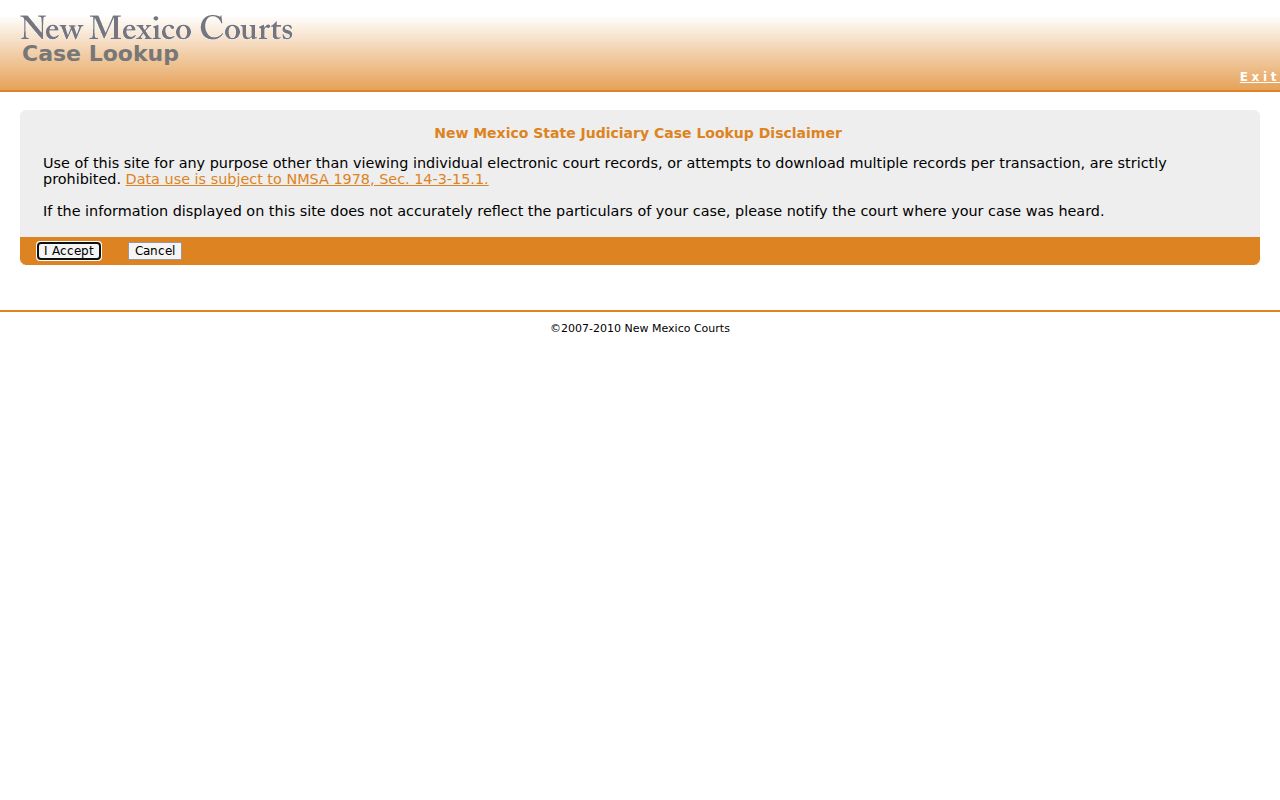
Use the public index to identify the court and case number, then ask that court’s clerk about inspection, a copy, or certification.
Note: Older court records before 1997 follow the Judiciary IPRA route rather than an assumption that every file is in the public index.
Las Cruces Court Custody
Record custody follows the court, not just the city name. Las Cruces Municipal Court handles City court matters at 135 E. Griggs Ave. The Las Cruces Magistrate Court is at 110 Calle de Alegra. Doña Ana County’s Third Judicial District Court is at 201 W. Picacho Ave. A City citation, magistrate matter, and district proceeding can therefore begin in different offices even when each relates to Las Cruces.
The federal court has a separate route. The United States District Court for the District of New Mexico serves Las Cruces from 100 N. Church St. PACER is the registered electronic service, while the Las Cruces courthouse has public terminals for viewing case information. When the filing court is unknown, the PACER Case Locator is the appropriate starting point. A court index never replaces the clerk’s copy when exact text or certification matters.
The Las Cruces Municipal Court page is the source for the municipal-court view shown below.
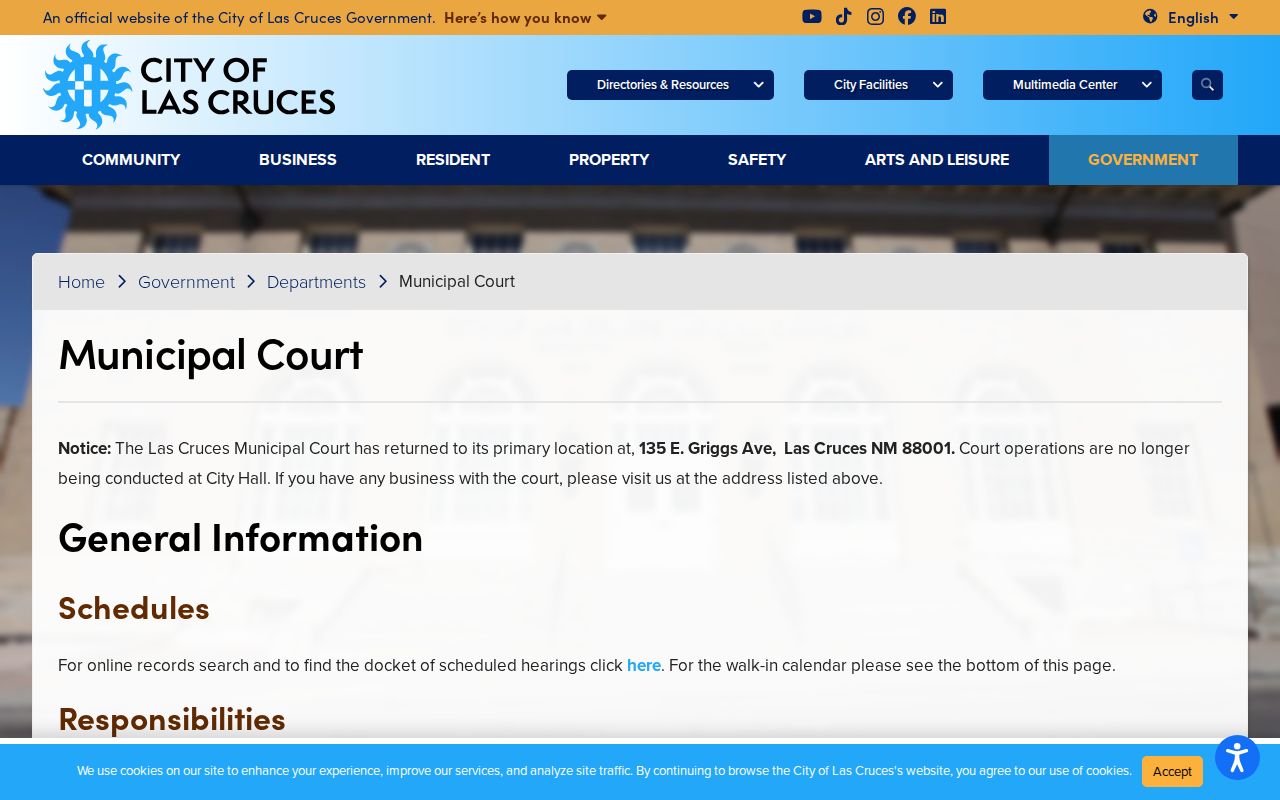
Matching the case number to its court before contacting a clerk avoids asking one custodian for a record another court holds.
Las Cruces Case Lookup Access
Case Lookup is an index, not a document vault. The Judiciary also identifies re:SearchNM as a registered route for permitted case and document research. Registration and access tiers apply, and confidential material remains limited. The two services answer different questions: the public index helps locate public case information, while a registered route may support more detailed research where the Judiciary permits it.
A concise request to the correct court includes the displayed case number, caption, court, approximate filing date, and the particular item sought, such as a register of actions or an order. Ask whether the item is public, whether redaction review is needed, and what identifier staff require. That focused approach is better than requesting a broad collection of personal details.
Las Cruces Voter Record Limits
The New Mexico Voter Information Portal is designed for a voter’s own registration, polling-place, ballot, and related election information. The observed blank form asks for first name, last name, date of birth, and county, with date of birth required. It is not a broad name-search directory. For a personal registration question, use the official portal or contact Doña Ana County Elections rather than testing identifying details for another person.
The state’s voter-data process is different. It uses a formal request that specifies purpose, jurisdiction, data selections, delivery method, and requester information under New Mexico election law, including NMSA 1978 § 1-4-5.5. It is not a substitute for the voter-facing portal. An inactive indicator also does not establish that a person moved or is otherwise ineligible.
Keep election dates and retrieval dates with any official confirmation because registration and polling information can change over time.
Las Cruces Vital Record Access
Birth and death certificates are relationship-based records in New Mexico. The Department of Health limits certified copies to the subject or registrant, immediate family, or a person with documented tangible legal interest. Birth records may become available after 100 years when the registrant is deceased, and death records after 50 years. Those archival windows change where to look, not the need to follow the custodian’s rules.
Marriage-license copies come from the County Clerk where the license was issued. A divorce decree comes from the district court where entered. Do not treat a court index as a decree or a marriage record as a state vital certificate. When a certificate is still restricted, check the Department of Health’s current process, gather the required relationship or legal-interest documentation, and use archival or library sources only as separate corroboration.
Note: A historical date, county, spelling variant, and documented relationship make a vital-record request more precise without presuming a certificate will be available.
Las Cruces Detention Record Scope
Detention, corrections, police, and court records are separate systems. The current Doña Ana County JCMS Inmates Online roster uses a required Keyword field. Its observed roster fields are booking number, last name, first name, middle name, sex, booking date, and a last-updated timestamp. This is a current-custody lead, not a conviction record or a complete court history. A booking date does not establish an arrest date in every circumstance.
| Roster field | What it is for |
|---|---|
| Booking number | Current roster identifier |
| Name components | Displayed surname, first name, and middle name fields |
| Sex and booking date | Displayed roster context, subject to update |
| Last updated | Timestamp showing the roster is time-sensitive |
The roster inventory does not establish a person’s full history or case outcome. The County roster page is the source for the blank roster view below.
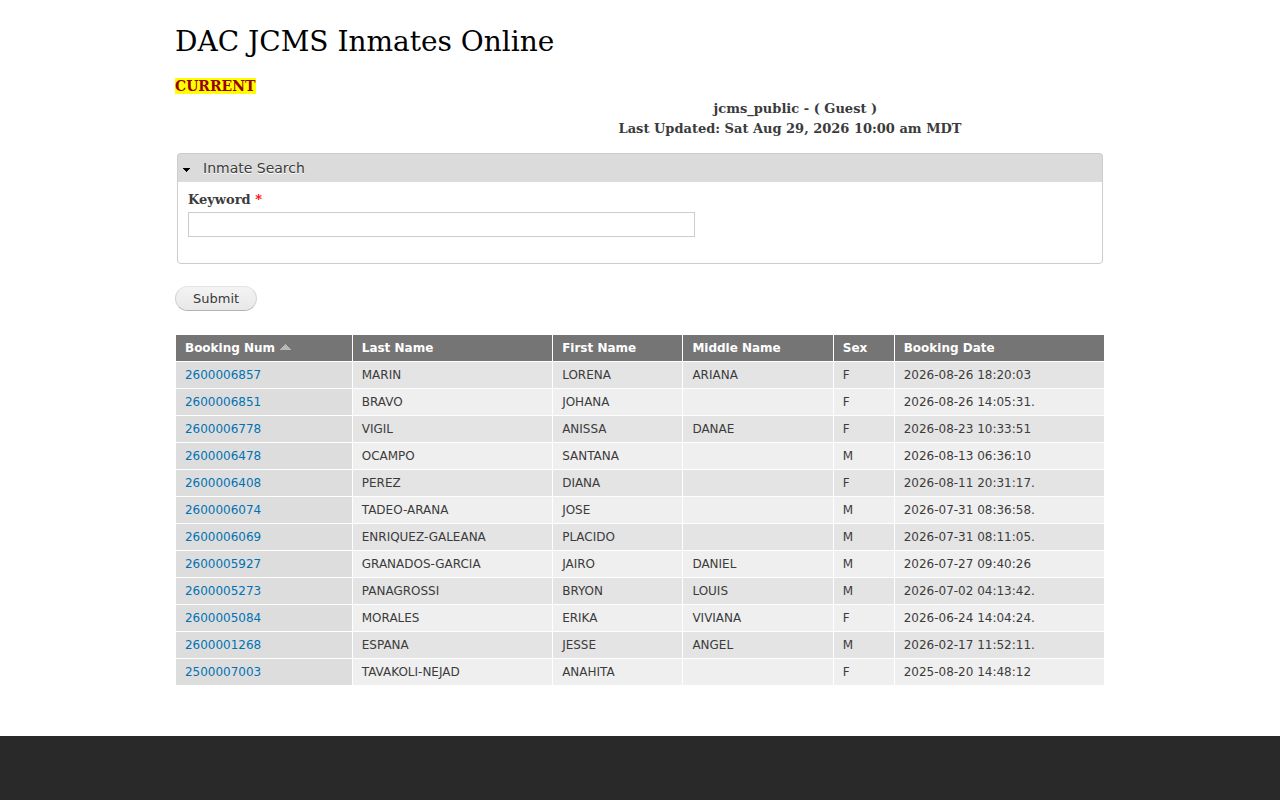
Confirm any case outcome with the correct court and preserve the retrieval date because custody information can change after a booking, transfer, release, or correction.
The New Mexico Department of Public Safety registry-resources page is the source for the state access view below.
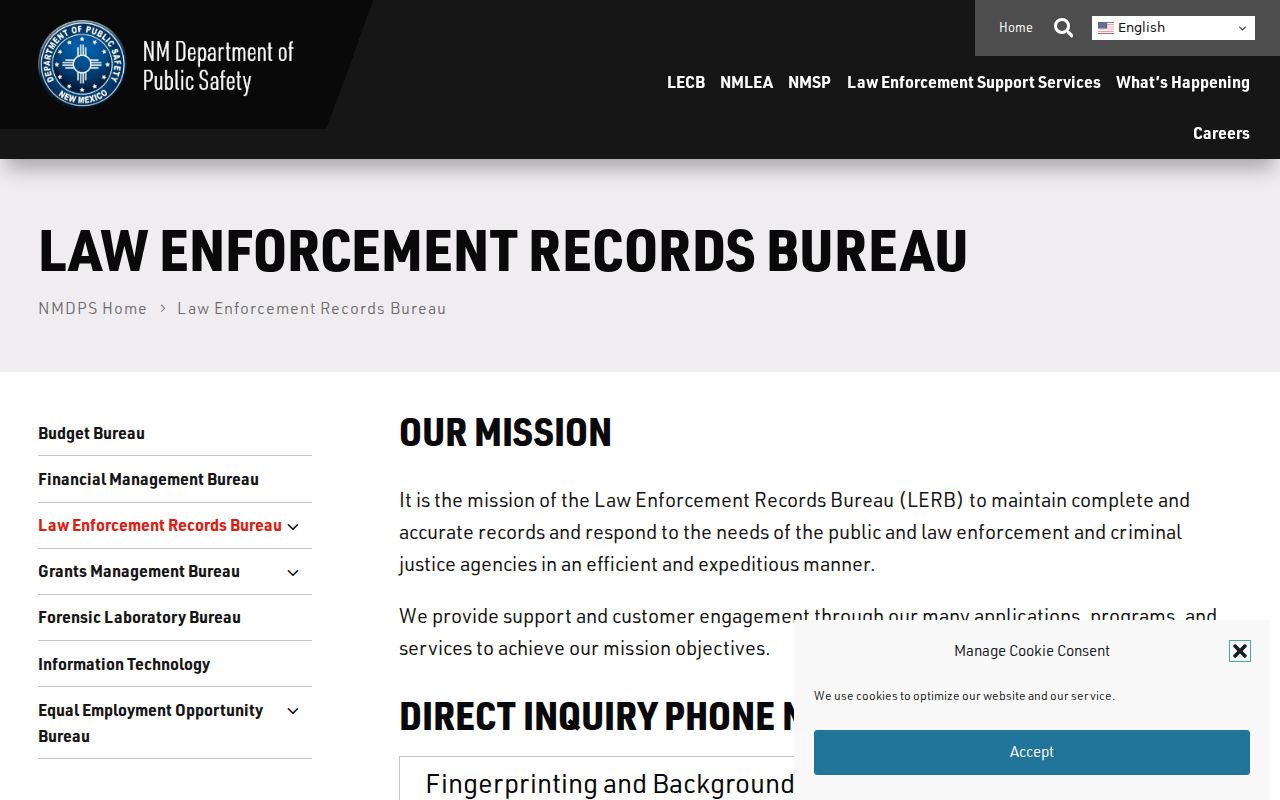
State registry information is not a substitute for a court record, and it should never be republished as a person-level list.
The Las Cruces Police Records Section page is the source for this City records-access view.
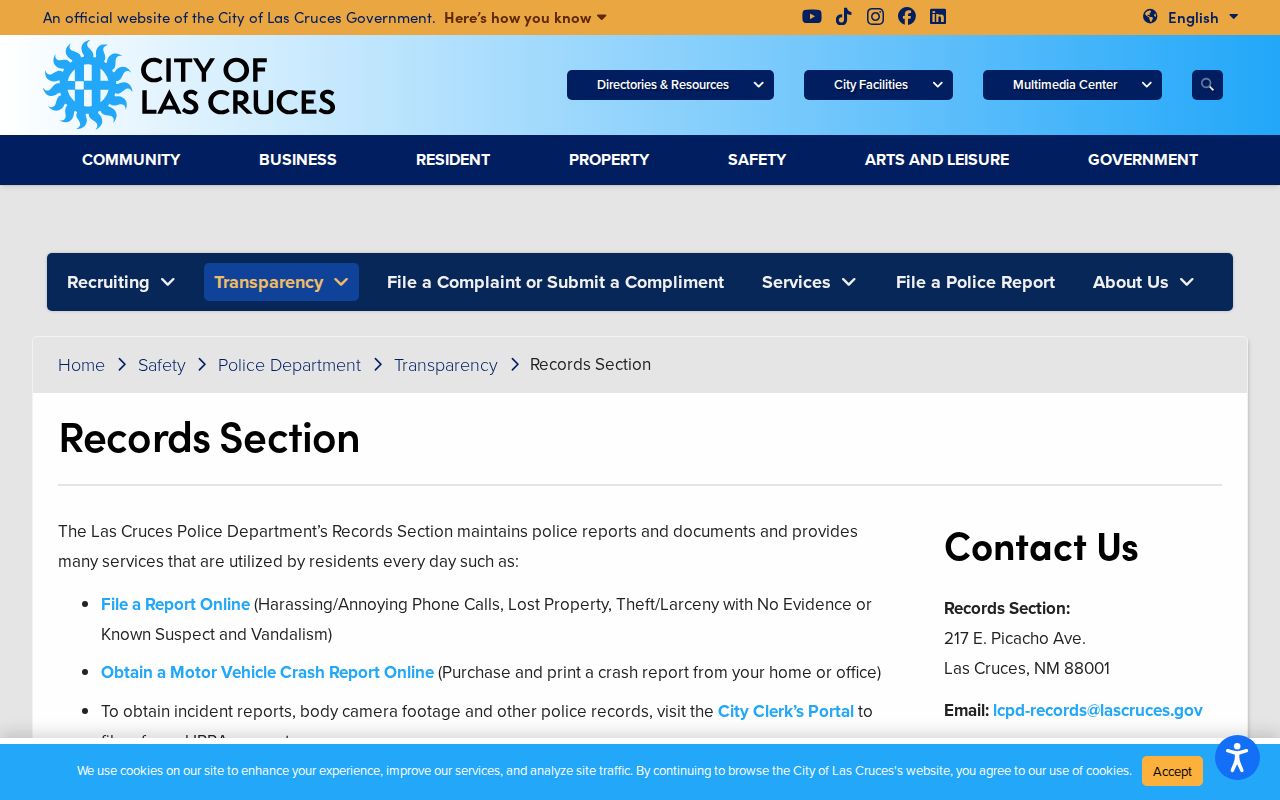
City activity-history inquiries are listed at $3 and the City says they are not official arrest records; a focused IPRA request should identify the date, event type, location, agency, and report number when known.
Verify Las Cruces License Records
When a record identifies a claimed professional credential, use the state source rather than a name-only assumption. The New Mexico Regulation and Licensing Department online-services route directs users to choose a profession and then search by license type, name, license number, status, or address. A quick result checks status. Official verification is a separate request, which matters when a formal confirmation is required.
Las Cruces Accela can search municipal building records by state license number, but a permit record and state credential are different record sets. The state source is the authority for license status. The RLD online-services page is the source for the screen shown below.

Note: Select the profession first, then preserve the license number and status with the date checked before seeking an official verification.
Las Cruces Resident Lookup Boundaries
New Mexico’s Inspection of Public Records Act, NMSA 1978 §§ 14-2-1 through 14-2-12, supports inspection of public records subject to statutory exceptions. A custodian can provide a segregable public portion while withholding protected material. State and City requests work best when they identify the department, date range, record category, and preferred inspection or copy format. Ask for a cost estimate when a larger response is possible.
New Mexico Safe at Home gives eligible participants a substitute address and protects their actual address, phone number, and email from public release absent a court order. Court redactions and vital-record restrictions also have a lawful purpose. Do not combine public fragments to locate a protected address, reconstruct someone’s movements, or build a contacts list. Stop and contact the appropriate custodian or the program when a confidentiality issue appears.
Lawful use. Use official Las Cruces records for a focused, lawful question such as family history, estate documentation, civic transparency, or communicating with the responsible office. New Mexico stalking and harassment laws, including NMSA 1978 §§ 30-3A-2 and 30-3A-3, prohibit using information to stalk, threaten, harass, or harm anyone.